
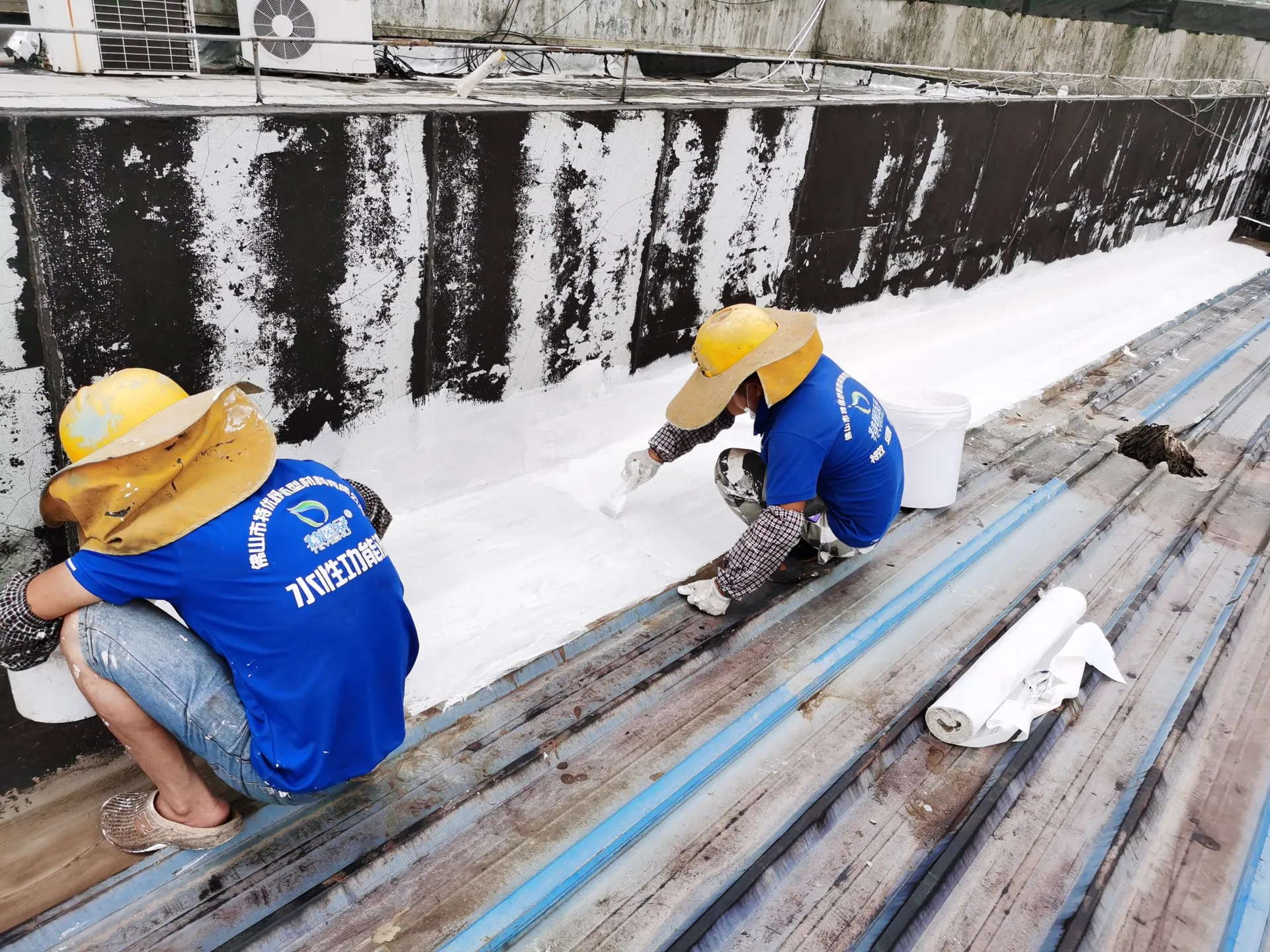
Leak repair · Metal and concrete roofs
Patched every year, still leaking?Final payment only after a water test
Most water gets in at screws, laps and box gutters. We find each leak, then build a continuous fabric-reinforced 3-coat seal at every joint. No sheets removed, no shutdown.
- Every leak point marked and photographed
- Fabric-reinforced 3-coat seal, not just sealant
- Checked by water test or after rain
- No sheets removed, no shutdown
- 527%
- elongation at break (AEW320)
- 0.3 MPa
- watertight for 30 min
- −10 °C
- low-temperature flexibility, no cracks
- Cold-applied
- water-based, no open flame
Metal roofs leak in six places
Where water drips inside is often not where it gets in. We follow the water path up the roof, mark and photograph each point, then repair it like this.
-
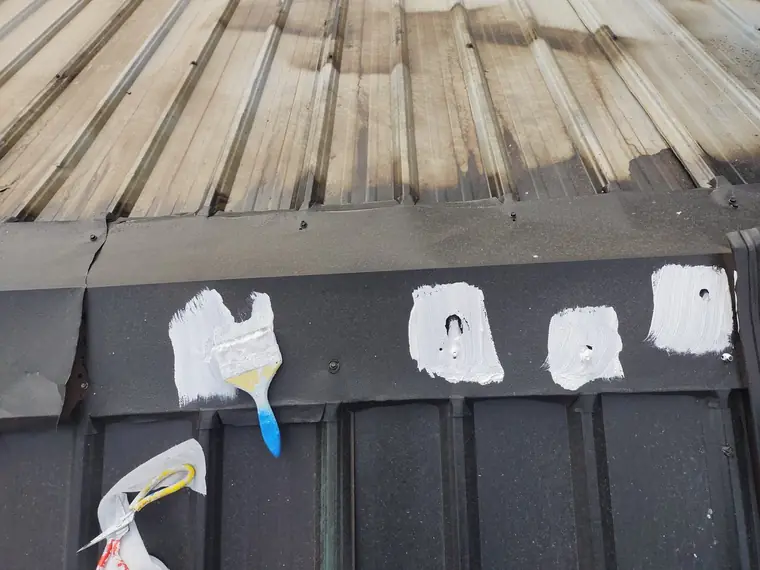
Screws
Rusted screw heads, perished washers, rust-through around the holes.
Loose or broken screws tightened or replaced; each one de-rusted and sealed with a fabric-reinforced 3-coat seal. A roof can have thousands — done area by area and recorded.
MAP120 · AEW320
-
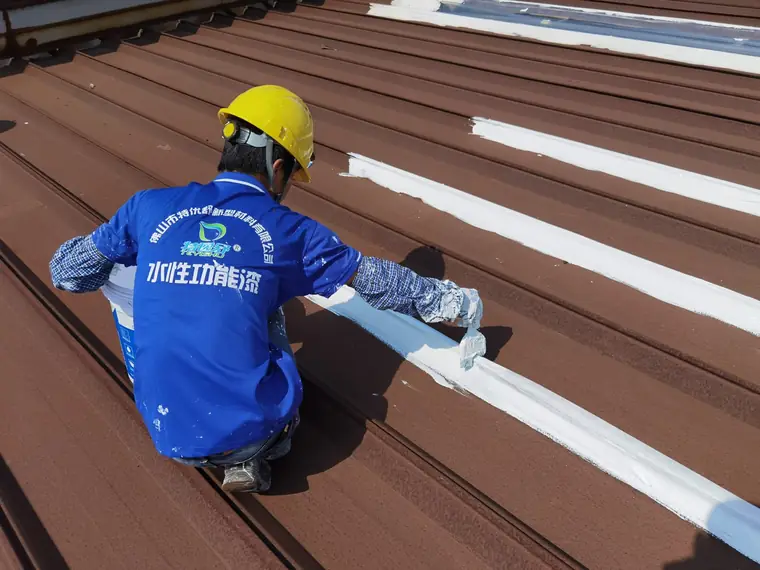
Laps
Seal failed at sheet overlaps; water is driven in by heavy or slanting rain.
Cleaned and de-rusted, then a 3-coat fabric seal along the lap, at least 100 mm each side. Where leaks are widespread, 2–3 coats of AEW320 over the whole roof afterwards.
AEW320
-
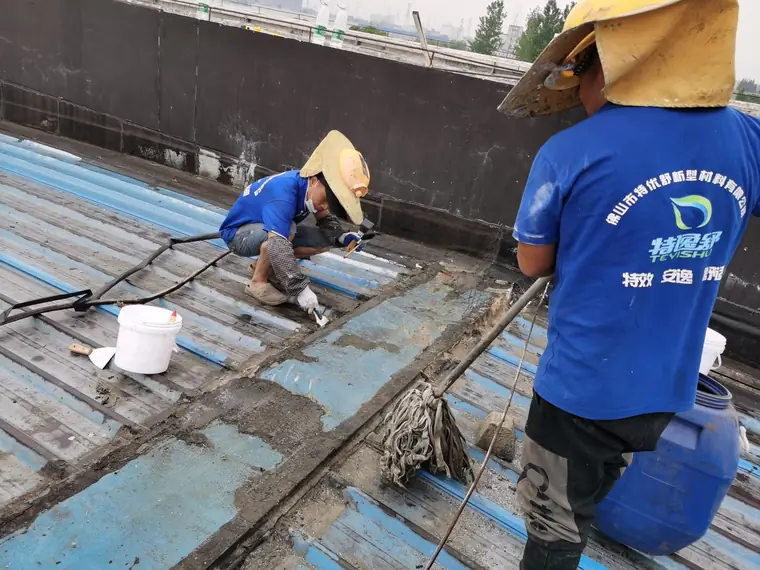
Box gutters
Rusted gutters with cracked joints, leaking when water stands; eaves rust too.
Joints, corners and outlets sealed with fabric and three coats, then the whole gutter coated with AEW320. Silt cleared, washed and dried, loose rust removed and primed with MAP120; rusted-through sections replaced or patched first.
MAP120 · AEW320
-
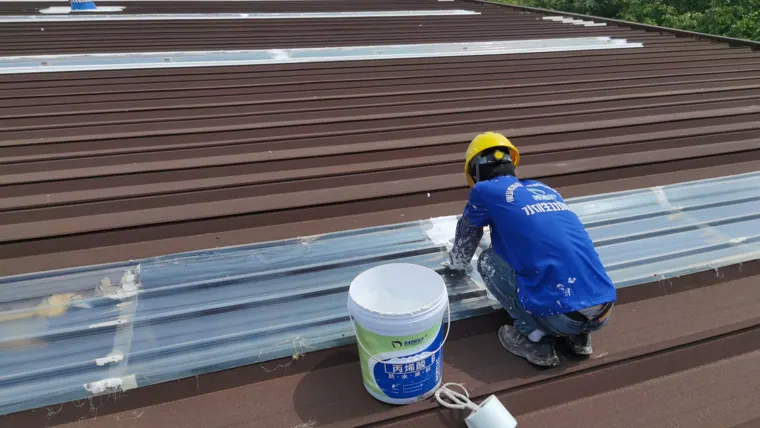
Skylights
The joint between rooflight and metal sheet deforms and opens; old rooflights crack at a touch.
De-rusted, then a 3-coat fabric seal that covers the rooflight edge and a strip of the metal sheet — not just the gap. Brittle, cracked rooflights are replaced first.
AEW320
-
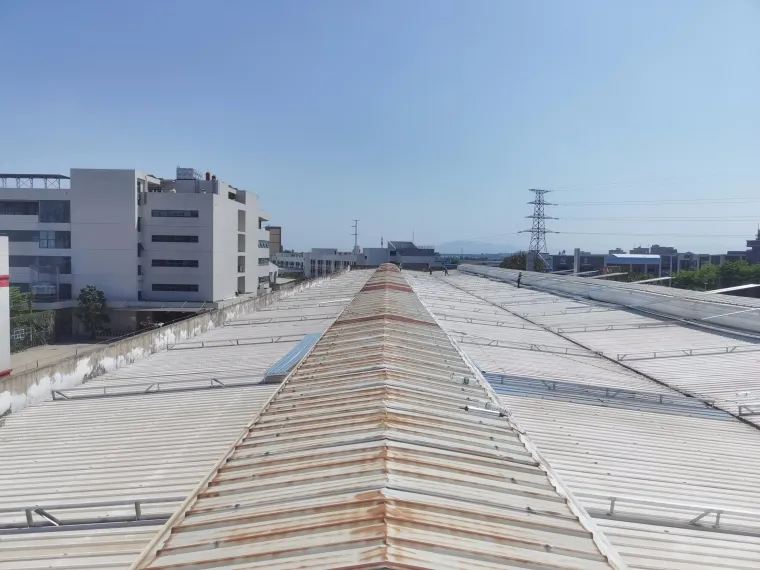
Ridges
Ridge caps and flashings rusted, old coating peeling, rain enters at the joints.
Cap laps and fixings de-rusted and sealed with fabric and three coats; rusted caps converted or replaced, then coated with the rest of the roof.
MAP120 · AEW320
-
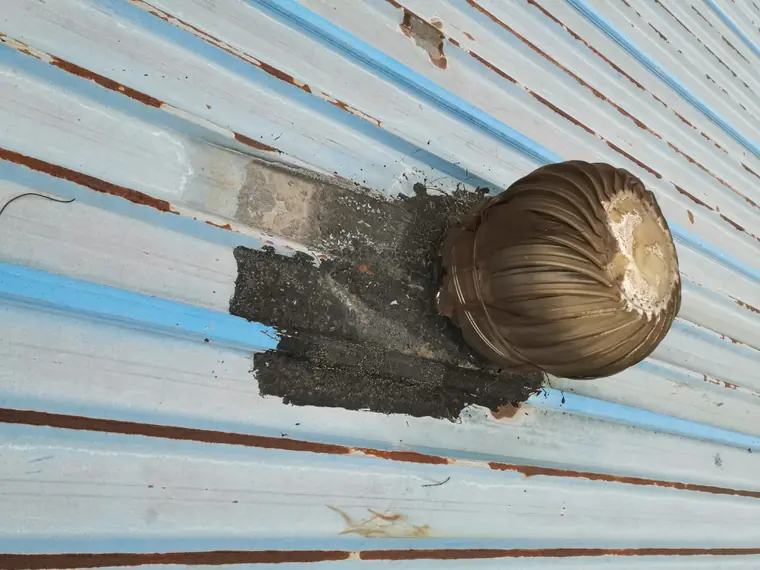
Fan and vent bases
Flashing at the base of fans and roof vents cracked; old patches lifting.
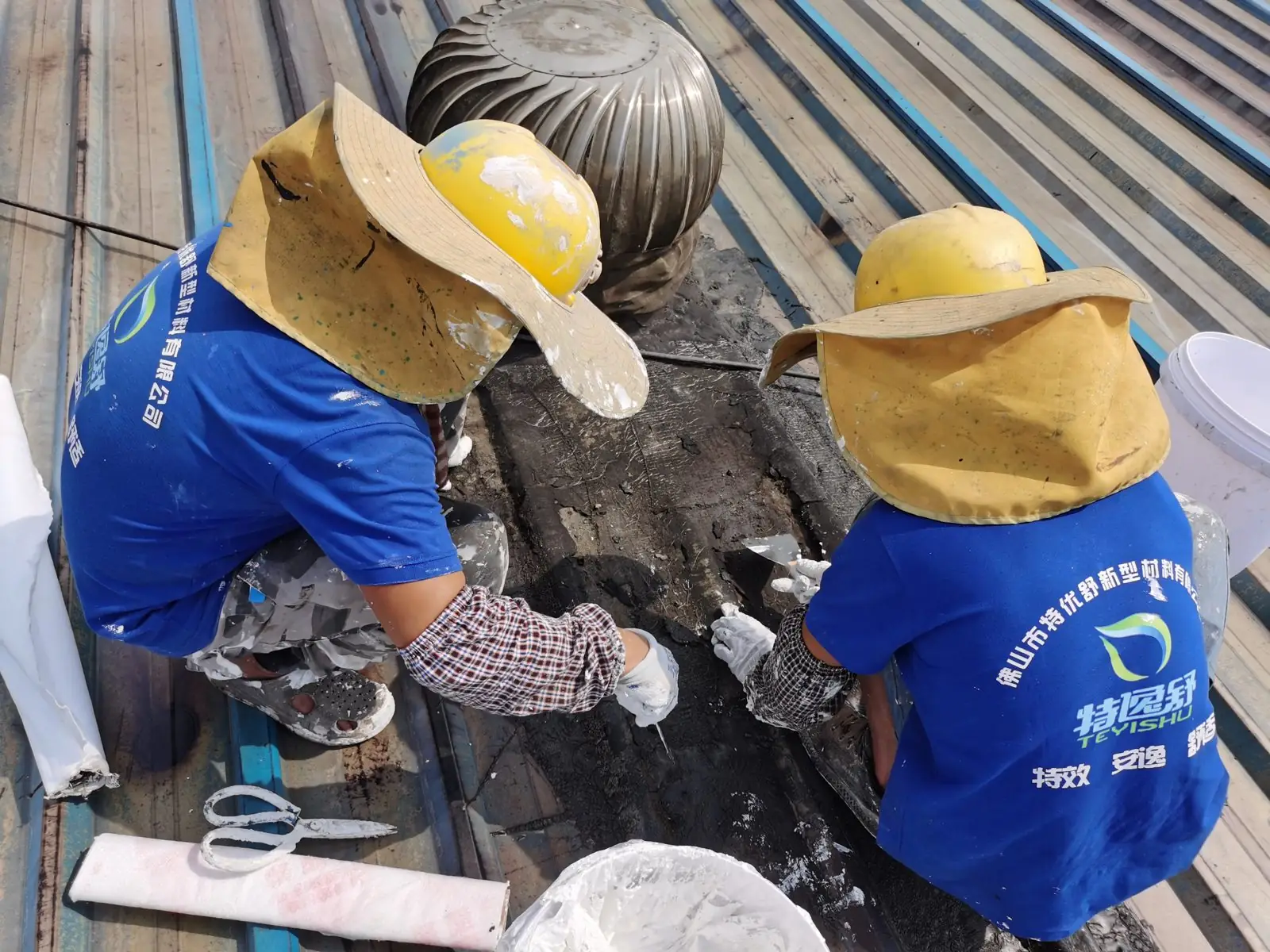
Old cracked patches removed, de-rusted, then a 3-coat fabric seal around the base — up the upstand and out over the surrounding sheet.
AEW320
Repaired areas are checked with a water test or after rain; the job is complete only when they stay dry. Every leak point's location, repair and before-and-after photos come with the handover documents.
Why a fabric-reinforced 3-coat seal beats sealant
Sealant only plugs the gap. The 3-coat seal builds a continuous reinforced waterproof layer over the joint that moves with the roof. When repairs keep failing, it's usually because only sealant was used, the rust wasn't treated, or the real leak point was never found.
- 1
Rust first, then seal
Around screws and laps, rust is removed and primed first. Untreated rust keeps spreading and opens up next to the repair.
- 2
Fabric and coating form one layer
A first coat of AEW320 elastomeric roof coating, polyester fabric pressed into it while wet, then a second coat over it and a third to build thickness — covering a margin around the joint.
- 3
Moves with the roof, doesn't crack
527% elongation at break, watertight at 0.3 MPa, no cracks at −10 °C (CTC report WT2021B01C03937). Water-based and cold-applied — no hot work.
Repair the leaks only, or waterproof the whole roof?
It depends on whether leaks are concentrated or widespread. If you can count the leak points, repairing the joints is enough.
| Joint repair | Whole-roof waterproofing | |
|---|---|---|
| When | Leaks concentrated at joints; the rest of the roof in fair condition | Leaks widespread; roof generally aged and rusted |
| What we do | Clean, de-rust, AEW320 3-coat fabric seal | Joints sealed with fabric, then 2–3 coats of AEW320 over the whole roof |
| Priced by | Number and length of joints | Developed roof area |
| Best for | Limited budget, need to stop leaks fast | Repeated repairs still leaking; want it done once |
Third-party test data: AEW320 roof waterproofing coating
Waterproof coatings fail when they age: after years of sun and acid rain the film turns brittle and cracks at screws and joints. The standard tests elongation after ageing — ask for it.
| Property | Standard requirement | TEYISHU AEW320 |
|---|---|---|
| Elongation at break | ≥ 300% | 527% |
| Elongation after heat ageing | ≥ 200% | 276% |
| Elongation after acid treatment | ≥ 200% | 584% |
| Elongation after alkali treatment | ≥ 200% | 581% |
| Watertightness (0.3 MPa, 30 min) | Watertight | Watertight |
| Low-temperature flexibility, −10 °C | No cracks | No cracks |
| Solids content | ≥ 65% | 69% |
National Building Materials Testing Center (CTC Group), report WT2021B01C03937 — tested to JC/T 864-2008 Type I. All items passed.
Repaired roofs: before and after
-
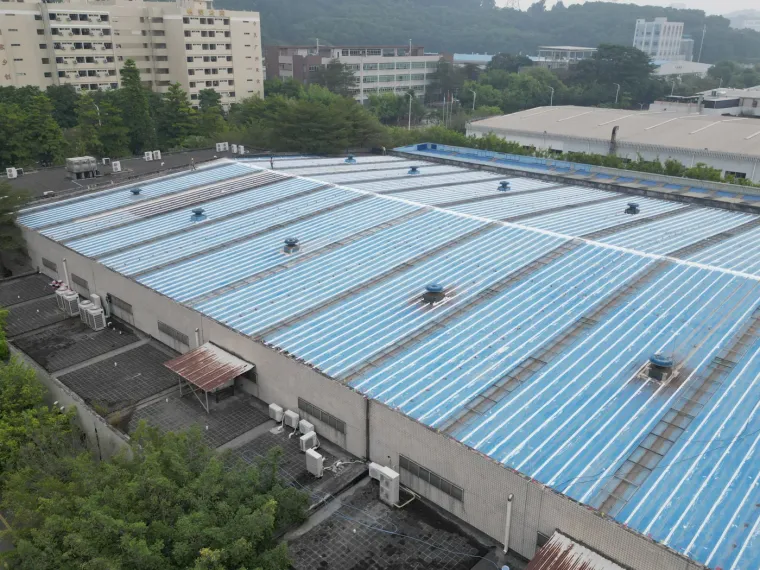 Before
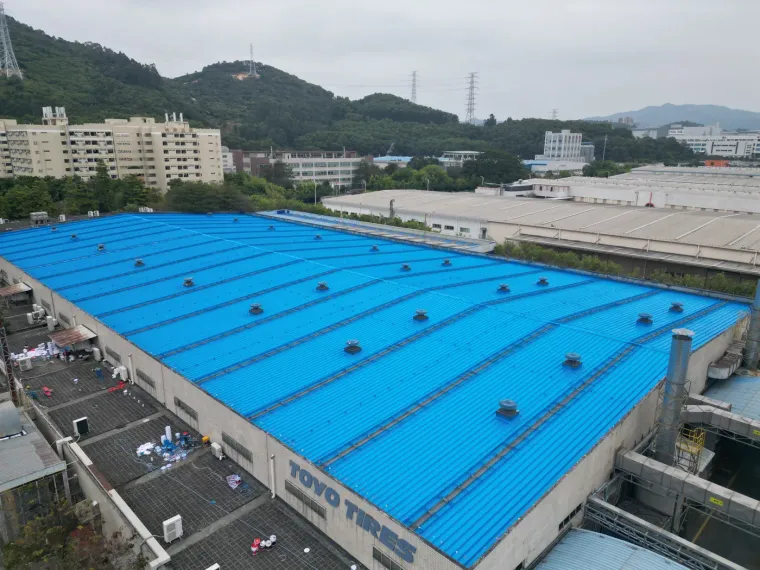 After
Joint by joint
TOYO Rubber & Plastics · Guangzhou
Metal roof crowded with ventilators and skylights · 13,200 m²
Ventilator bases, skylight edges and laps repaired one by one, then the whole roof recoated.
-
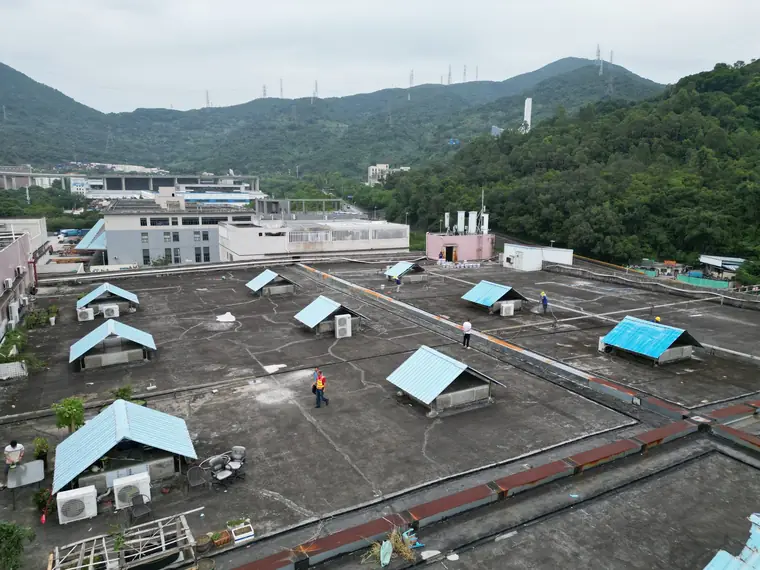 Before
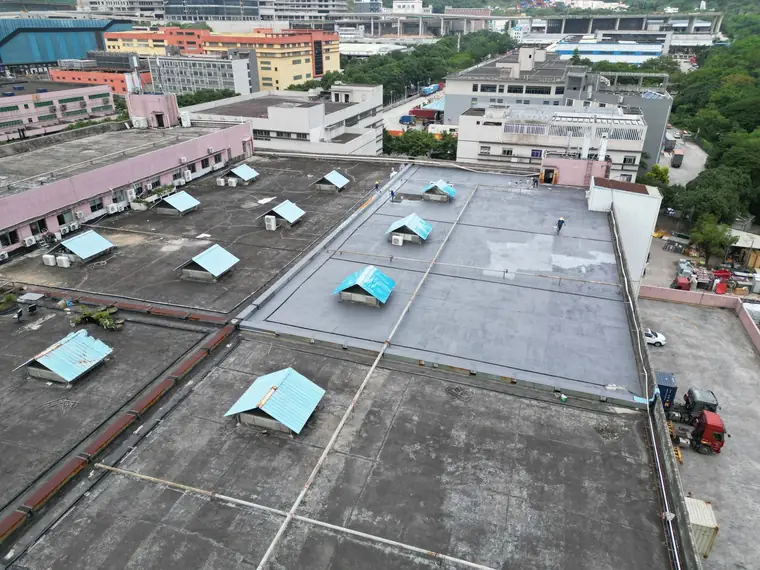 After
New waterproof layer
Multi-storey factory · Longgang, Shenzhen
Flat concrete roof · 9,200 m²
Equipment bases treated first, then a continuous new waterproof coating over the whole roof.
Buying the coatings for your own crew or your customers?
No MOQ on standard products, 20 kg pails, ships 3–5 days after payment. We specify the system, calculate quantities and train your applicators by video.
Questions buyers ask
How much does roof leak repair cost?
We can't find where it leaks. What do you do?
Can you repair only the leak points?
Which product for which roof?
Can AEW320 be applied over old bitumen or membrane?
What are the application conditions?
Send photos of the leaks — we'll tell you how to fix them
Tell us what you need. Photos of the roof help us answer faster.
- Project enquirySend a photo of the whole roof, where it drips inside and a close-up of the roof above. We'll tell you whether to repair joints or waterproof the whole roof.
- Product enquiryKnow the product? Ask for a price. Not sure? Tell us the use and the area and our engineers will specify it.
We reply by email within one working day.